






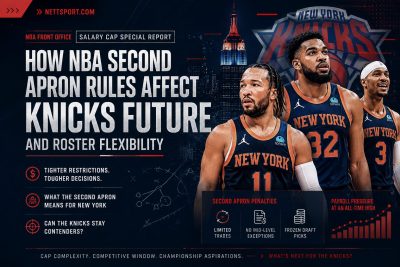
The New York Knicks are operating in a different NBA economy than teams faced just a few years ago. Big spending no longer guarantees more ways to improve. In many cases, the opposite is true. That reality explains why league executives increasingly discuss the second salary cap apron as a competitive issue rather than a financial one. For the Knicks, the conversation is becoming more relevant as expectations rise and roster decisions grow more expensive.
New York enters its next phase with momentum, but maintaining that position may require avoiding restrictions that come with crossing one of the league’s most significant financial thresholds.
How NBA Second Apron Rules Affect Knicks Future Planning
The second apron exists to limit flexibility for teams that consistently spend above designated payroll levels. Unlike previous luxury tax systems, the latest structure introduces basketball penalties alongside financial consequences. Teams above the threshold face limitations in roster construction, reduced trade mechanisms, and tighter control over future transactions.
For the Knicks, those restrictions matter because their current position creates competing priorities. The organization wants to remain competitive while protecting enough flexibility to react to changing opportunities. Crossing the second apron could restrict how contracts are combined in trades. Certain acquisition methods become unavailable. Future maneuverability becomes harder to maintain.
Those limitations may not hurt immediately. Over multiple seasons, however, they can reduce the ability to adjust around injuries, player development, or shifting market conditions. New York’s decision-making appears built around preventing those constraints from becoming permanent.
Knicks Roster Flexibility Could Become Their Biggest Advantage
Roster flexibility often receives less attention than star acquisitions, but front offices treat it as a major competitive asset. Teams operating below restrictive thresholds can respond faster. That advantage becomes especially important in seasons where trade markets change unexpectedly. For the Knicks, remaining flexible may create opportunities that are unavailable to teams already committed financially.
The current roster structure allows management to evaluate internal growth while preserving future options. That does not mean avoiding investment. It means investment is being timed carefully. Recent NBA history shows that expensive rosters do not automatically create deeper playoff runs. Teams with cleaner cap structures frequently maintain stronger adjustment capacity.
The Knicks appear to understand that balance. A roster built with financial discipline can still pursue impact additions. The difference is that decisions are made selectively instead of reactively. Supporters of aggressive spending may argue New York should maximize every immediate opportunity. The counterargument is equally straightforward. Championship windows often stay open longer when flexibility survives.
What the Knicks Could Gain by Staying Below the Second Apron
Avoiding the second apron creates more than financial relief. It preserves optionality.
New York can retain leverage in trade conversations, maintain greater roster adaptability, and evaluate long-term contract commitments without immediate restrictions. That flexibility becomes valuable if market conditions change. A major player could become available. Young contributors could outperform expectations. Unexpected roster needs could emerge. Operating below the threshold keeps more responses available.
The Knicks are not the only organization thinking this way. Across the league, teams are becoming more selective about when they trigger restrictive payroll conditions. That trend reflects a changing NBA environment where sustainability matters almost as much as talent.
For New York, the challenge is maintaining competitiveness while preserving room to evolve. The second apron may not decide one season. It could shape several. And that possibility may explain why the Knicks continue treating flexibility as a priority instead of a compromise.
Why Knicks Refuse to Cross the Second Apron and What Comes Next
Dolan Draws a Line: Knicks Owner Rules Out Second Apron Spend