





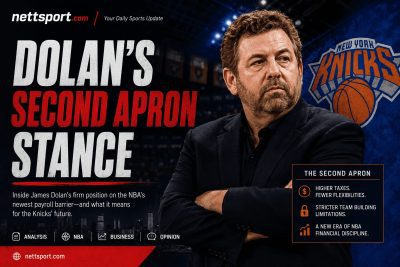
New York Knicks owner James Dolan has made a definitive statement. He declared the team will not operate above the NBA’s second luxury tax apron. This pronouncement sends a clear message. It highlights the organization’s commitment to fiscal responsibility. This stance is rooted in the league’s evolving collective bargaining agreement. Coming off a season where the Knicks exceeded expectations, showcasing a gritty, competitive spirit that resonated deeply with the fanbase, this decision will undoubtedly shape their strategy. It impacts the crucial offseason period and beyond. The pursuit of sustained success, it appears, must be balanced with careful financial stewardship. This mandate is now firmly established by ownership.
Navigating the NBA’s Financial Landscape
The NBA’s new collective bargaining agreement introduced stricter luxury tax penalties. The second apron acts as a significant barrier for teams aiming to spend without restraint. Crossing this threshold triggers severe restrictions. These include limitations on using the mid-level exception, trading future first-round picks, and aggregating salaries in trades. These measures were designed to curb superteam formation. They also aim to promote competitive balance, making financial prudence a cornerstone of modern team building. For the Knicks, a franchise often associated with blockbuster moves and high-spending, Dolan’s stance signals a calculated shift. The team’s current core, featuring rising stars and established veterans, has been carefully assembled. Keeping this group together, and adding complementary pieces, will require shrewd management. This must happen within these newfound budgetary constraints. Every contract decision and potential acquisition will now be filtered through this non-second apron lens.
Dolan’s Second Apron Stance and Future Roster Moves
Dolan’s explicit directive to avoid the second apron underscores a long-term vision for the franchise. It prioritizes sustainable growth over potentially fleeting, expensive gambles. This isn’t merely a cost-cutting measure; it’s a strategic philosophy. It impacts every facet of roster construction. While it ensures financial stability, it also means the Knicks will need to be incredibly efficient with their cap space and assets. Player development, smart drafting, and opportunistic trades will become even more paramount. The potential to retain key free agents or extend contracts for foundational players like Jalen Brunson or Julius Randle without hitting the second apron presents a complex challenge. The landscape of player movement, as highlighted by recent decisions like Trae Young declining his option to become a free agent [Sources: Wizards’ Young to decline option, be FA], underscores the need for clear financial planning. Big decisions are looming, with extensions for core pieces expected to be negotiated. This approach necessitates a reliance on internal improvement and calculated risks rather than simply outspending competitors. The front office, led by Leon Rose, will be tasked with identifying undervalued talent and making tough choices. This might involve foregoing an immediate splash in favor of incremental, controlled progress.
Fan Expectations and a Path Forward
The announcement is likely to elicit mixed reactions from the passionate Knicks fanbase. On one hand, the fiscal discipline could be viewed positively. It ensures the franchise avoids the pitfalls of past overspending. On the other, it might fuel anxieties about the team’s willingness to go ‘all in’ to contend for a championship. This is especially true given their recent playoff appearances. Building a contender in today’s NBA often requires significant financial investment. The second apron exists precisely to penalize teams that attempt to circumvent the salary cap to an extreme degree. For the Knicks, success will now be largely predicated on maximizing their current assets and making astute evaluations of talent. The organization will need to be creative in attracting players. Perhaps it will emphasize the allure of playing in New York and for a winning culture, rather than solely relying on financial incentives that push them into the punitive tax bracket. This strategic approach, if executed effectively, could foster a more stable, home-grown identity for the team. It would move away from the past era of constantly chasing big names. Such disciplined approaches are often celebrated in various sports, from the WNBA where dominant figures like A’ja Wilson lead their teams to finals [Wilson powers Aces into Commissioner’s Cup final] to the world stage of football where even seasoned veterans like Cristiano Ronaldo continually push their limits [Ronaldo: Portugal’s World Cup ‘far from over’]. The upcoming seasons will be a true test of this financial blueprint.
James Dolan’s definitive declaration regarding the second apron marks a significant moment for the New York Knicks. It’s a statement that prioritizes long-term financial health and sustainable team building. This is true even if it introduces additional complexities to an already challenging NBA landscape. The path to a championship will now be meticulously charted within these financial parameters. It demands ingenuity, strategic foresight, and a steadfast commitment to player development. How the Knicks navigate this new reality, balancing ambition with fiscal responsibility, will define their trajectory for years to come. The message is clear: the Knicks are building for the future, and they’re doing it their way, under a new set of rules.
How NBA Second Apron Rules Affect Knicks Future and Roster Flexibility