










The linguistic divide between ‘football’ and ‘soccer’ often sparks lively debate across the Anglophone world. While many nations, particularly Britain, refer to the sport as ‘football,’ Americans predominantly use ‘soccer.’ This isn’t a modern American invention designed to distinguish it from gridiron football. Instead, the fascinating answer to why it is called soccer in America traces back to the sport’s very English origins. It’s a surprising etymological journey that began in the British public school system centuries ago.
The British Roots of “Soccer”
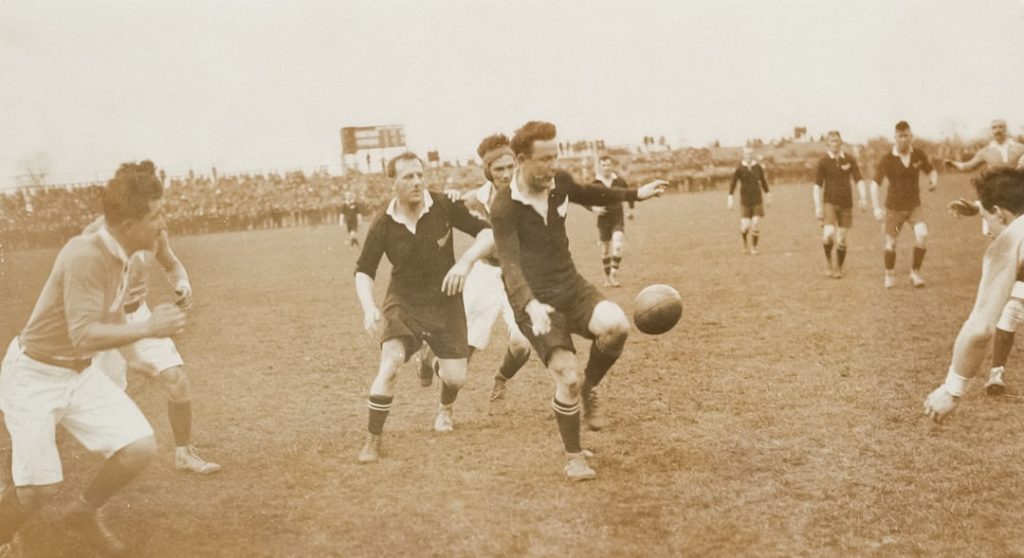
To truly understand why Americans say ‘soccer,’ we must delve into 19th-century England. The term ‘football’ itself clearly describes a ball played with the foot. However, as various forms of the game evolved in Britain, especially within its prestigious public schools, a need for differentiation emerged. Rugby School, for example, codified a game allowing players to carry the ball, which eventually became known as ‘rugby football.’
Simultaneously, another prominent form of the game, emphasizing kicking and passing, gained traction. The Football Association (FA) formally organized this version in 1863. To distinguish this code from ‘rugby football,’ a common practice of the era involved creating abbreviated, slang terms. ‘Rugby’ became ‘rugger,’ and they shortened ‘Association Football’ to ‘assoc.’ Over time, the ‘assoc’ received the popular Oxford University ‘-er’ suffix, transforming it into ‘soccer.’ Thus, the word ‘soccer’ originated not in America, but in the heart of England, as a colloquialism for Association Football.
From English Classrooms to American Fields
The journey of ‘soccer’ from English classrooms to American fields illustrates a compelling tale of linguistic adoption. As the sport gained international popularity in the late 19th and early 20th centuries, it arrived in various countries, including the United States. During this period, people in England used both ‘football’ and ‘soccer’ interchangeably to refer to Association Football. However, in America, another sport, American football, rapidly developed its own identity, claiming the moniker ‘football’ for itself.
To avoid confusion and clearly differentiate the two sports, Americans increasingly adopted the English slang term ‘soccer’ for Association Football. This provided a clear linguistic separation between the gridiron game and the global game. The sport’s history in England stretches back centuries; formative versions of the game were played long before modern codification. King Edward II famously banned football in 1314, citing ‘great noise in the city, caused by hustling over large balls from which many evils might arise which God forbid.’ This historical layering explains how an imported slang term found a permanent home in America due to local linguistic needs. For those interested in a deeper dive into the sport’s journey in the U.S., ‘The Billion Dollar Goal’ offers a compelling narrative of U.S. soccer’s long road to relevance, including how the game came to be called soccer in America.
A Global Game, A Lingering Linguistic Divide
Today, the linguistic divide persists, with ‘football’ dominating most of the world and ‘soccer’ is firmly entrenched in American parlance. This distinction becomes particularly evident on the global stage, such as during the quadrennial FIFA World Cup, where nations from every continent compete. The United States Men’s National Team (USMNT) proudly represents a nation that calls the sport ‘soccer,’ even as their opponents often hail from countries where ‘football’ is the only acceptable term.
The ongoing 2026 FIFA World Cup provides a vivid backdrop for this global tapestry of terminology. As teams battle through the group stage and into the knockout rounds, the universal passion for the game transcends linguistic differences. For example, European powerhouse Belgium recently topped Group G with a commanding 5-1 victory over New Zealand, a match featuring standout performances from Leandro Trossard and Kevin de Bruyne. While Belgium, like most of Europe, refers to the sport as ‘football,’ their participation alongside the USMNT in the same tournament highlights the shared love for the game, regardless of its name. The road to the final gradually shapes up, with 32 teams advancing to the knockout phase after the group stage. The excitement of the tournament, with its intricate bracket and potential matchups, is palpable, showcasing the sport’s immense global appeal. Fans can follow the journey of the USMNT and other nations closely through the 2026 FIFA World Cup bracket, illustrating the diverse linguistic landscape that coexists within the world’s most beloved sport. Ultimately, whether it’s called ‘football’ or ‘soccer,’ the beautiful game continues to captivate billions, a testament to its universal appeal that transcends even its own nomenclature.