









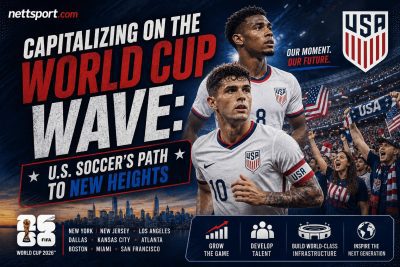
The drumbeat of the 2026 FIFA World Cup is growing louder, and for U.S. Soccer, it presents an unparalleled opportunity. Co-hosting the world’s most watched sporting event alongside Canada and Mexico means the eyes of the globe will be firmly fixed on North America. This isn’t just a tournament; it’s a monumental chance for U.S. Soccer to significantly elevate its standing both domestically and internationally. The challenge, and the immense potential, lies in how U.S. Soccer has to capitalize on the wave of the World Cup to reach new heights. This moment is unprecedented, offering a unique platform to convert casual observers into fervent fans, and to cement soccer’s place in the American sporting landscape for generations to come. The groundwork for this expansion is being carefully laid, but proactive, strategic efforts will be essential to truly harness this powerful surge.
Riding the Momentum: How U.S. Soccer Can Capitalize on the World Cup Wave
The upcoming World Cup provides a spotlight unlike any other. For too long, soccer in the United States has often been viewed as a niche sport, frequently overshadowed by the “big four” of American football, basketball, baseball, and ice hockey. However, the consistent growth of Major League Soccer (MLS), the undeniable success of the U.S. Women’s National Team (USWNT), and the increasing competitiveness of the U.S. Men’s National Team (USMNT) have slowly but surely shifted perceptions. To truly ride this U.S. Soccer World Cup wave, a multi-faceted approach is required. Investment in infrastructure, both physical and organizational, must be prioritized. Strategic marketing campaigns designed to reach new demographics are also imperative, especially those who might not typically follow the sport. The passion generated by a home World Cup can be transformational, but only if U.S. Soccer carefully nurtures and directs it into sustainable pathways for engagement. Organizers are meticulously undertaking the planning for this event, and U.S. Soccer anticipates a lasting legacy.
One crucial area of focus must be grassroots development. Young talent needs to be identified and cultivated earlier and more effectively than ever before. Access to quality coaching and facilities must be expanded across all socioeconomic strata. Programs designed to introduce the sport to children in diverse communities are vital, fostering a love for the game from a young age. This ensures a wider talent pool and strengthens soccer’s cultural roots. The USMNT’s journey to the World Cup underscores the importance of a deep and resilient player pipeline. For instance, the USMNT always closely monitors the fitness of key players like Christian Pulisic, which became evident when Pulisic trained solo before a significant U.S. game. This constant attention on individual player development feeds directly into national team success. The future stars of American soccer are out there, and U.S. Soccer must discover and shape them, with the World Cup providing the perfect stage to inspire them.
Elevating Professional Leagues and Fan Engagement
Beyond youth development, the health and visibility of professional domestic leagues are paramount for capitalizing on the World Cup energy. The MLS has made significant strides, attracting high-profile international players and expanding its fan base across the nation. The National Women’s Soccer League (NWSL) continues to be a global leader in women’s football, showcasing incredible talent and inspiring countless young athletes. The World Cup offers a unique chance to bridge the gap between international fervor and domestic league loyalty. Match attendance and television viewership for both MLS and NWSL must be boosted during and after the tournament, transforming temporary interest into enduring support. Special promotions, community events, and accessible ticket pricing can all contribute to this goal, making the sport more approachable. U.S. Soccer needs to emphasize the connection between the national team heroes and their club affiliations, helping fans connect with local teams.
Fan engagement is not just about showing up for games; it’s about creating a lasting cultural connection that extends beyond the pitch. This includes digital content strategies that keep fans engaged year-round, storytelling that highlights the unique journeys of American players, and accessible pathways for fans to participate in the sport themselves, whether through recreational leagues or fan clubs. The excitement international tournaments generate, such as the comprehensive preparation the USMNT is undertaking for its spaced-out World Cup schedule, should directly translate into sustained interest in the everyday rhythm of domestic soccer. This sustained interest will be critical in fully embracing the U.S. Soccer World Cup wave. Moreover, U.S. Soccer should expand media coverage across all platforms, providing in-depth analysis and human-interest stories that resonate with a broad audience, further solidifying soccer’s place. Soccer’s growing popularity is evident, but U.S. Soccer must continuously feed it with compelling narratives and accessible opportunities.
Sustaining the U.S. Soccer World Cup Wave: A Long-Term Vision
The real test for U.S. Soccer will not be in the immediate aftermath of the 2026 World Cup, but in the decade that follows. The buzz will naturally subside, but the infrastructure, the fan base, and the passion must remain vibrant. A robust, long-term vision is required, one that transcends tournament cycles and focuses on continuous improvement. This vision includes continued investment in coach education, referee development, and innovative player identification systems that cast a wide net. Partnerships between U.S. Soccer, professional clubs, and local communities will be crucial, creating a seamless pathway from playgrounds to professional pitches. Education initiatives about the global game, its rich history, and its cultural significance can deepen appreciation among new fans, turning fleeting interest into lifelong devotion. This isn’t merely about winning trophies; U.S. Soccer aims to build a footballing nation from the ground up.
The economic benefits of hosting such an event are substantial, and U.S. Soccer should strategically reinvest a significant portion of these revenues back into the sport at all levels. Transparency in financial management and clear accountability for developmental programs will foster trust and ensure U.S. Soccer maximizes resources for maximum impact. The opportunity for U.S. Soccer to truly capitalize on the wave of the World Cup to reach new heights is a generational one. It demands foresight, collaboration, and an unwavering commitment to the sport’s growth. U.S. Soccer is writing the future of soccer in America now, and the 2026 World Cup is undoubtedly the most significant chapter yet. U.S. Soccer must embrace this moment with conviction and a strategic blueprint for sustained excellence, ensuring the World Cup wave leaves a permanent, positive mark on American soccer.