









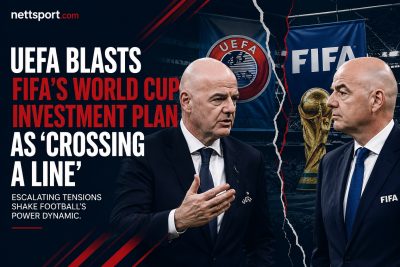
European football’s governing body, UEFA, has expressed profound outrage regarding recent proposals from FIFA, the sport’s global authority. FIFA intends to seek private investment in its flagship competitions, most notably the World Cup. This contentious plan ignited a fierce debate within international football’s upper echelons. UEFA declared the move “crosses a line that football’s governing institutions should never cross.” European football’s leadership has unequivocally rejected the very notion of a FIFA World Cup private investment scheme. They assert that the tournament is not FIFA’s property to sell.
Reports, initially surfacing in prominent financial and news outlets like the Financial Times and The Times, detailed FIFA’s intentions. These reports suggest a significant shift in how the global governing body plans to fund its operations and development initiatives. FIFA’s proposal involves expanding football development funding to an ambitious target exceeding $10 billion (£7.5 billion). This substantial sum, according to FIFA, is designated for the growth of the game worldwide. Its numerous member associations must approve the plan. The specifics of how this private investment would be structured and the extent of external influence it might bring remain central to the controversy.
The Rationale Behind FIFA’s Investment Push
FIFA states its objective for pursuing a FIFA World Cup private investment model: inject unprecedented capital into football development across the globe. The organization envisions a future where more resources flow into grassroots programs, infrastructure projects, and talent pathways in developing football nations. This expansion of funding is presented as a crucial step towards democratizing access to the sport and elevating its standards universally. FIFA often argues that such a substantial financial injection is necessary to realize these ambitious development goals, particularly in regions where resources are scarce.
The proposed $10 billion fund aims to be a game-changer. It promises to accelerate football’s growth far beyond current capabilities. This financial backing would allow for more comprehensive and sustainable development programs. The global reach of football is undeniable. FIFA maintains this initiative would further solidify its position as the world’s most popular sport. The details surrounding the private entities involved in this potential investment have not been fully disclosed, adding another layer of complexity and scrutiny to the ongoing discussions.
UEFA’s Vehement Opposition to FIFA World Cup Private Investment
UEFA’s reaction has been swift and unsparing. It paints a clear picture of deep-seated concern and outright opposition. The European body’s statement was unequivocal: “This crosses a line that football’s governing institutions should never cross.” This strong language underscores a fundamental disagreement over the World Cup’s very nature and ownership. UEFA firmly believes the World Cup, as a global spectacle and cultural phenomenon, transcends mere commercial asset status. It is widely considered a shared heritage, a collective property of the footballing world, rather than an entity solely controlled by FIFA.
UEFA’s core argument encapsulates the assertion: “None of us are the owners of football. [The World Cup] is not Fifa’s to sell.” This perspective suggests private interests could compromise the tournament’s integrity and universal appeal. Concerns regarding potential conflicts of interest and the transparency of such a deal have also been raised. The Times report specifically highlighted claims that the plans could potentially generate tens of millions of pounds for FIFA president Gianni Infantino. This detail has undoubtedly fueled UEFA’s apprehension and intensified scrutiny surrounding the proposed FIFA World Cup private investment.
Implications for Football Governance and Future Relations
The public spat between UEFA and FIFA highlights a significant power struggle within international football governance. This disagreement is not merely about financial models; it touches upon fundamental principles of stewardship, accountability, and the sport’s future direction. The World Cup, football’s most prestigious event, holds immense cultural and economic value. This makes any proposed changes to its structure or ownership highly sensitive. The debate over the FIFA World Cup private investment plan could set a precedent for how major tournaments are managed and funded going forward.
The potential ramifications of this dispute extend beyond immediate financial implications. It could strain relations between FIFA and its most powerful confederation, UEFA. UEFA represents many of the sport’s wealthiest clubs and national associations. FIFA’s member associations must approve the plan to proceed, meaning extensive lobbying and negotiations are likely to ensue. The outcome of this standoff will undoubtedly shape global football’s landscape for years to come. It will influence everything from competition formats to revenue distribution and the beautiful game’s very ethos. The football world watches closely as these two titans of the sport navigate this critical juncture.