







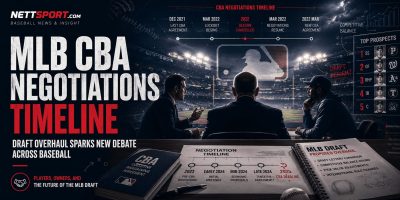
The air around Major League Baseball’s executive offices and the Players Association headquarters is thick with anticipation, carrying the familiar tension of high-stakes discussions. As the current Collective Bargaining Agreement (CBA) draws closer to its expiration, both sides face a ticking clock to forge a new deal that will shape the future of America’s pastime. At the heart of the latest round of talks, a comprehensive draft overhaul proposal from the league has emerged as a significant talking point, potentially reshaping how young talent enters professional baseball. Understanding the intricacies of the MLB CBA negotiations timeline is paramount for fans, players, and franchise owners alike, as these discussions will lay the financial and structural foundations of the game for years to come.
The Evolving Landscape of MLB CBA Negotiations
The ongoing dialogue between Major League Baseball and the MLB Players Association (MLBPA) presents a complex tapestry, which weaves together economic philosophy, competitive balance, and player welfare. For months, representatives from both sides have engaged in discussions covering a wide array of topics, from minimum salaries and service time manipulation to revenue sharing models and the luxury tax threshold. The existing CBA, a document governing virtually every aspect of a player’s employment – from minor league contracts to free agency – is nearing its conclusion. Historically, these negotiation periods have often brought challenges, occasionally leading to work stoppages that interrupt the sacred rhythm of the baseball season. The stakes are undeniably high, with the livelihoods of hundreds of players and the financial stability of thirty franchises hanging in the balance. Legal teams and economic analysts meticulously scrutinize every proposal and counter-proposal. Both parties pursue a mutually beneficial agreement that ensures the sport’s continued growth and prosperity. Fans hope for an equitable resolution without any interruption to the game they love.
Unpacking the League’s Proposed Draft Overhaul
Central to the current phase of the MLB CBA negotiations timeline is the league’s assertive push for a sweeping draft overhaul. This ambitious proposal, presented to the MLBPA, seeks to fundamentally alter how amateur talent enters the professional ranks: how they are identified, drafted, and integrated. While specifics continue as a debate behind closed doors, key elements of the proposed changes reportedly include a lottery system for the top amateur draft picks. This system aims to disincentivize tanking and promote competitive balance across the league. Under such a system, the worst-performing teams would no longer automatically secure the first overall selection, potentially leading to more widespread competition throughout the regular season.
Another significant component often associated with such a massive restructuring involves the potential for an international draft. Currently, international amateur players sign through a bonus pool system, which the league argues lacks transparency and fosters inequities. An international draft would standardize the process, bringing it more in line with the domestic amateur draft. The league’s rationale behind these changes largely roots in fostering a more competitive environment, preventing teams from intentionally losing to secure high draft picks, and streamlining the talent acquisition process globally. However, the MLBPA approaches these proposals with cautious skepticism. Players often voice concerns that such changes could negatively impact the earning potential and contractual flexibility for young players, particularly those from international backgrounds. The union expects to ensure any new system protects the rights and future earning capabilities of its members, preventing any structure that might depress player salaries or limit opportunities for emerging talent. The union also carefully considers the impact of such changes on player development programs. You can find more details on where things stand in these complex discussions at CBS Sports.
What’s Next for the MLB CBA Negotiations Timeline?
As the deadline looms, the intensity of the MLB CBA negotiations timeline is set to escalate. Both sides recognize that a failure to reach an agreement could have severe ramifications, including the specter of a lockout, which would halt all baseball operations until a new deal is ratified. Such an outcome would prove detrimental to players, owners, and the passionate fanbase alike, disrupting spring training, potentially delaying the start of the regular season, and costing millions in lost revenue. Further bargaining sessions will likely see increased frequency as the expiration date approaches. Mediators might assist in bridging the gaps between the league and the union on contentious issues.
The draft overhaul, while a significant point of contention, represents merely one piece of a much larger puzzle. Both sides must also resolve other crucial issues, such as the minimum player salary, stricter penalties for competitive balance tax violations, and adjustments to the arbitration system. The new agreement will also likely enshrine the ongoing health and safety protocols, especially in light of recent global events. For general insights into the challenges professional athletes face and how career decisions take shape within their respective leagues, consider the recent retirement of NHL legend Jonathan Toews, as ESPN reported, which underscores the broader context of player careers and the importance of secure collective agreements. The path forward demands flexibility, compromise, and a shared vision for the sport’s longevity. An equitable resolution is not just desired; it is essential for the sustained success and integrity of Major League Baseball.