









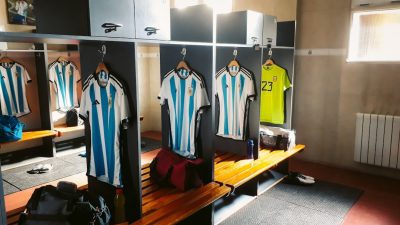
Lionel Messi, Argentina’s revered captain and talisman, will begin the Albiceleste’s final group stage encounter against Jordan from the substitutes’ bench. Coach Lionel Scaloni confirmed this significant announcement on Friday, ahead of Saturday’s match at AT&T Stadium in Arlington, Texas. The strategic decision comes as Argentina has already comfortably secured its progression to the round of 32, having dominated Group J with an unblemished record. This move allows the reigning champions to manage player fatigue and explore tactical options as they prepare for the more demanding knockout stages of the 2026 FIFA World Cup.
Strategic Management for the Albiceleste
Coach Scaloni articulated his plan during Friday’s news conference, stating, “Leo will be a substitute tomorrow, to play later. We’ll announce the team tomorrow.” This measured approach underscores Argentina’s confidence and foresight, given their strong performance in the group stage. The Albiceleste secured their spot as Group J winners after impressive victories against both Algeria and Austria. Their early qualification provides a valuable opportunity for squad rotation, ensuring key players rest and maintain fitness for the intense challenges that lie ahead. Such careful management is often a hallmark of teams that go deep into major tournaments, allowing them to maintain peak performance when it matters most. The coaching staff’s focus clearly shifts towards the demanding knockout rounds, where every tactical decision and player’s peak physical condition will be crucial for their title defense.
The Road Ahead: Facing History-Making Cape Verde
Argentina’s reward for topping Group J is a highly anticipated clash with the Group H runners-up, Cape Verde. This round of 32 fixture is scheduled for next Friday in Miami, promising an intriguing encounter. Cape Verde has undoubtedly emerged as one of the most compelling narratives of this World Cup, making history as the smallest nation ever to reach the knockout stage in their tournament debut. Their remarkable journey saw them finish as runners-up in Group H, a testament to their resilience, tactical discipline, and surprising prowess on the global stage. The 2026 FIFA World Cup itself presents an unprecedented spectacle, featuring an expanded format with 48 teams distributed across twelve groups of four. This structure introduces significant complexities, as eight of the twelve groups will also send their third-place teams to the first knockout rounds. A staggering 72 games are required just to reduce the field by a third, highlighting the sheer scale of this tournament. The ranking of these third-place teams is meticulously determined by points accrued, followed by goal difference, goals scored, their team conduct score (based on yellow and red cards), and finally, their FIFA ranking. This intricate system means that every match, even those seemingly less significant, can have profound implications for a team’s progression. For a detailed overview of the evolving group standings and permutations, fans can consult comprehensive World Cup group standings.
Messi Bench Argentina: A Glimpse into Squad Depth and Future Strategy
The decision to have Lionel Messi bench Argentina’s final group game against Jordan speaks volumes about the depth and confidence within Scaloni’s squad. While Messi’s unparalleled talent and leadership are always a formidable asset, his absence from the starting XI provides a crucial opportunity for other players to step up, demonstrate their capabilities, and gain valuable match experience on the grandest stage. This tactical flexibility defines successful tournament teams, enabling them to effectively manage player fatigue, mitigate injury risks, and adapt to various opponents, especially when qualification is already secured. It also sends a clear message about the team’s collective strength, indicating that Argentina does not solely rely on its superstar captain, but rather possesses a robust and versatile roster. The upcoming match against Jordan, even with Messi starting on the bench, will serve as an important tune-up for the more formidable challenges that lie ahead. The defending champions are meticulously preparing for their encounter with Cape Verde, a team that has already proven its ability to defy expectations and upset established footballing nations. The Blue Sharks’ historic qualification is a compelling story in itself, as highlighted by BBC Sport Africa, detailing their impressive debut and the factors behind their success. This strategic rotation allows Argentina to fine-tune their collective rhythm and ensure every player is primed for the intense demands of the knockout stages.
As Argentina approaches its final group stage match with Lionel Messi strategically on the bench, the focus remains steadfastly on the demanding knockout rounds. This calculated decision by Coach Scaloni reflects a well-managed campaign, prioritizing long-term success and player welfare in a tournament that promises to be both expansive and challenging. The stage is now set for an intriguing clash against Jordan, followed by a compelling encounter with the Cinderella story of Cape Verde, as Argentina continues its resolute quest for another coveted World Cup title. The Albiceleste’s journey testifies to both individual brilliance and collective strength, a balance Scaloni is clearly keen to maintain.