







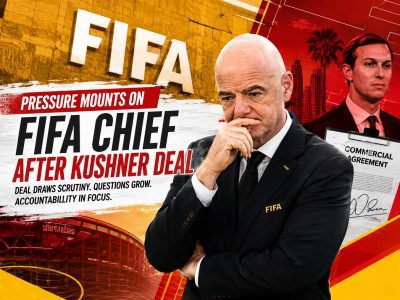
EAST RUTHERFORD, UNITED STATES – Despite what many considered a wildly successful 2026 FIFA World Cup, the tenure of FIFA President Gianni Infantino has grown increasingly tenuous. New allegations and mounting controversy are now threatening his leadership, casting a shadow over an organization still striving to shake off its past scandals. The pressure on Infantino has intensified dramatically following revelations of a secret plan to sell significant stakes in the World Cup to private investors, a move that triggered immediate global outrage. This unfolding situation represents a significant Gianni Infantino FIFA crisis.
The controversy centers on a proposal by Infantino to sell a 20% stake in the commercial and tournament rights of the World Cup and other FIFA tournaments. This audacious scheme, which aimed to bring in substantial private investment, quickly became a flashpoint. Joshua Kushner, brother of Jared Kushner and son-in-law to United States President Donald J. Trump, was positioned as the lead investor for this private equity firm. Infantino’s close ties to President Trump had been evident in the months leading up to and during the tournament; he literally and figuratively locked arms with the President, first by awarding him the inaugural FIFA Peace Prize, and later by standing alongside him during the trophy presentation to World Cup winner Spain. This perceived coziness and the proposed deal fueled suspicions of aggressive commercialization and a cash grab, further jeopardizing Infantino’s once-assured bid for a fourth term.
The Kushner-Linked World Cup Scheme
The details of the proposed deal sent shockwaves through the international football community. Infantino reportedly began approaching FIFA’s 211-member associations, offering them a substantial $20 million per federation if they agreed to his plan to sell a stake in the World Cup. Federations were given a deadline of September 19 to accept the proposal. This offer, intended to secure buy-in, instead ignited a fierce revolt. Critics viewed it as an attempt to bribe member associations into supporting a controversial privatization effort. The plan, revealed by The Times of London, made past FIFA transgressions seem almost quaint by comparison, highlighting the brazen nature of the proposed partnership with a member of President Trump’s family circle. The World Cup itself had just concluded, bringing in a record $15 billion in revenue, making the necessity of such a sale questionable in the eyes of many. For more details on the initial reports, readers can consult this SB Nation article.
Global Backlash and Boycott Threats
The backlash against Infantino’s plan was swift and severe. Outrage erupted around the world, leading to a near-immediate condemnation from several major global federations. Chief among them was UEFA, European football’s governing body, which took a particularly strong stance. All UEFA member nations banded together in agreement, signaling their intent to boycott upcoming tournaments, including any future World Cups, if the plan to sell stakes came to fruition. This united front from such a powerful confederation underscored the gravity of the situation and the depth of opposition to Infantino’s vision. CONCACAF, representing North and Central America and the Caribbean, and Asia’s confederation also joined the chorus of disapproval, further isolating the FIFA President. Faced with such overwhelming resistance and the threat of widespread boycotts, the controversial plan was ultimately scrapped. This development further deepened the Gianni Infantino FIFA crisis.
Infantino’s Reformer Image Tarnished Amidst FIFA Crisis
When Gianni Infantino was chosen to replace Sepp Blatter as president of FIFA, he was widely seen as a reformer. His mandate was to bring transparency and openness to an organization that scandal and deceit had long plagued. A decade later, however, these controversies have significantly tarnished that image. The collapse of the Kushner-linked private equity deal, coupled with the aggressive commercialization and controversial World Cup tweaks, has left Infantino exposed. The pressure on his tenure has only intensified, with UEFA turning up the heat even after FIFA abandoned the stake sale plan. The European federation has signaled that it would trigger a “no-confidence” vote for Infantino if he would not step aside. This direct challenge to his authority indicates the profound loss of trust and confidence among key football stakeholders. The allegations and controversies surrounding the World Cup and the proposed sale have plunged FIFA into a fresh Gianni Infantino FIFA crisis, raising serious questions about the future of its leadership and the direction of global football governance. The calls for Infantino to step down are growing louder, marking a critical juncture for the organization and its embattled president. Readers can find further analysis of the situation in this Los Angeles Times report.