








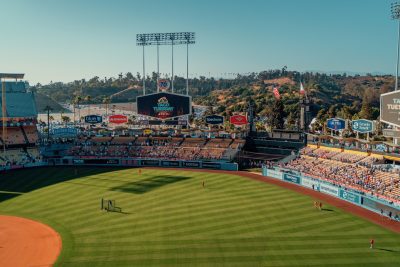
The sports world recently buzzed with news of a monumental transaction: Mark Walter, the controlling owner of the Los Angeles Dodgers, agreed to sell the iconic Los Angeles Lakers. He sold the NBA franchise to Josh Kushner and Bob Iger for a staggering $12.5 billion, barely a year after acquiring it for $10 billion. This transaction, which saw Walter unload his controlling stake, has been widely reported, including by CBS Sports. This swift turnaround inevitably sparked speculation across the sports landscape: could the Dodgers, another crown jewel in Walter’s extensive portfolio, be next on the selling block? While initial reports suggest such a move is unlikely, the intricate web of modern sports ownership, particularly concerning the Dodgers, becomes significantly more complicated with baseball’s most transcendent star, Shohei Ohtani. The Dodgers ownership future is a topic of intense interest, especially given the unique clauses embedded in Ohtani’s record-breaking contract.
The Dodgers’ Reign Under Walter
Mark Walter and Guggenheim Partners acquired the Los Angeles Dodgers in 2012 for a then-record $2.15 billion, a move that fundamentally reshaped the franchise’s trajectory. Since that landmark purchase, the organization has transformed into baseball’s model operation, setting benchmarks for both on-field performance and financial success. Under Walter’s stewardship, the Dodgers have achieved immense regular-season success, consistently contending for titles and capturing three World Series championships, including back-to-back victories in 2024 and 2025. This era of dominance has seen the franchise’s valuation soar from its initial purchase price to an estimated $9 billion, reflecting its status as a premier sports entity and a powerhouse brand in Los Angeles.
The Dodgers’ success under Walter extends beyond mere championships; they have cultivated a reputation for shrewd management, innovative player development, and a robust fan base. This has made them an immense revenue stream and a cornerstone of Walter’s expansive sports empire, which also includes the Sparks WNBA team, Chelsea FC of the English Premier League, and various other sports ventures. The stability and consistent winning culture established under Walter’s leadership are often cited as key factors in the team’s sustained dominance, creating an environment where top talent thrives. The team’s consistent presence in the postseason and its ability to attract and retain superstar players further solidify its position as a top-tier organization in professional sports.
Shohei Ohtani’s “Key Man” Clause and its Implications
Beyond the financial success and championship pedigree, the Dodgers ownership future uniquely intertwines with the contractual details of Shohei Ohtani, a factor that distinguishes it significantly from the Lakers’ recent transaction. Ohtani, who signed a landmark $700 million contract in December 2023, included a critical “key man” clause in his agreement, a provision rarely seen in professional sports. This clause grants the two-way superstar the right to opt out and become a free agent should either Mark Walter or President of Baseball Operations Andrew Friedman depart the organization.
Ohtani himself articulated the profound significance of this clause upon signing, stating through an interpreter, “Everybody has to be on the same page to be a winning organization. Those two are at the top of it.” He further emphasized his reliance on their continued presence, adding, “I feel almost like I’m having a contract with those two guys. If one of them are gone, things might get a little out of control. I just wanted a safety net.” This candid explanation reveals Ohtani’s deep trust in Walter and Friedman’s vision and leadership, viewing their continuity as essential to the team’s competitive integrity. The clause introduces a layer of complexity to any potential change in ownership that was not present in the Lakers’ recent sale, where such a player-centric contingency was absent. The stability of the Dodgers’ leadership, particularly Walter’s role, is directly tied to Ohtani’s long-term commitment, making any ownership transition a far more delicate proposition than a standard business transaction. This unique contractual arrangement underscores Ohtani’s unparalleled influence and the Dodgers’ commitment to securing his talent for the long haul.
Assessing the Dodgers Ownership Future
Despite the high-profile sale of the Lakers, which captured headlines across the sports world, sources familiar with the situation have consistently indicated that Mark Walter has no immediate plans to sell the Dodgers. This sentiment was echoed in reports, including one from the Los Angeles Times, which cited people familiar with the matter. Dodgers president and part owner Stan Kasten reinforced this sentiment, telling reporters that “there are no changes” with the Dodgers amid the Lakers transaction, directly addressing the swirling rumors. The decision to sell the Lakers was specific to that franchise, driven by its own unique market dynamics and investment opportunities, and does not signal a broader intent by Walter to dismantle his extensive sports holdings. For now, Walter is expected to remain the controlling owner as the Dodgers aim for their third straight title this fall, a testament to his continued dedication to the baseball club.
The question of Ohtani’s opt-out, should Walter eventually decide to sell, has also been addressed by those close to the situation. While the “key man” clause provides a significant safety net for Ohtani, reports from The Athletic, as cited by CBS Sports, suggest he would be “unlikely” to exercise it. Ohtani, now 32, is in his third season with the Dodgers, having already helped the club secure two World Series championships and establish a dominant presence in MLB. His comfort and success within the established Dodgers framework, coupled with the team’s consistent winning culture and robust support system, would likely outweigh the desire to seek a new team, even if a change in ownership occurred. The Dodgers ownership future, therefore, appears stable for the foreseeable future, with Walter maintaining his commitment to the baseball franchise and its superstar. The unique situation with Ohtani’s contract, however, ensures that any future considerations of a sale would be approached with extreme caution, given the potential ramifications for the team’s most valuable asset and the broader implications for the franchise’s competitive standing.
The sale of the Lakers by Mark Walter has undoubtedly drawn attention to his other major sports assets, prompting widespread speculation. However, the situation surrounding the Los Angeles Dodgers is distinct and considerably more complex. The team’s consistent success, its immense valuation, and crucially, the intricate contractual agreement with Shohei Ohtani, all contribute to a scenario where a sale is not currently anticipated. The “key man” clause, a testament to Ohtani’s unparalleled influence, adds a layer of complexity that makes the Dodgers a far more challenging asset to transfer than the Lakers. As the Dodgers continue their pursuit of another championship, their ownership structure appears firmly in place, safeguarded by both strategic intent and superstar clauses, ensuring continuity for one of baseball’s premier organizations.