









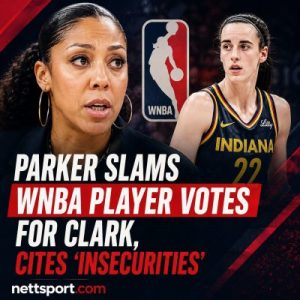
The WNBA All-Star selection process has ignited a fiery debate. League legend Candace Parker is at the forefront, sharply criticizing her fellow players. Rookie sensation Caitlin Clark finished a surprising 11th in player voting among WNBA guards. Parker did not mince words, attributing this low ranking to “insecurities” among some players. This controversy has cast a shadow over what should be a celebration of the league’s top talent. A broader discussion about player dynamics and recognition is being prompted.
The All-Star Snub and Parker’s Outspoken Critique
Caitlin Clark, the Indiana Fever’s star point guard, found herself in an unusual position during the WNBA All-Star voting. Her peers ranked Clark 11th among guards, despite her significant impact and widespread popularity. This player vote stood in stark contrast to the fan vote, where she secured the second spot. She placed third in the media vote. Ultimately, these combined results ensured Clark a starting position in the All-Star game. However, the discrepancy in player perception has become a major talking point.
Parker, a three-time WNBA champion and respected analyst for Prime Video, wasted no time addressing the glaring difference. She spoke on the Post Moves podcast, which she co-hosts with Clark’s Fever teammate Aliyah Boston. Parker directly challenged the rationale behind the player votes. Her assessment was unequivocal: “You’ve got some insecurities if you’re sitting down and putting Caitlin Clark as the 11th-best guard.” This statement immediately resonated across social media and among fans. A perceived disconnect between player sentiment and objective performance or public appeal was highlighted.
Clark’s on-court performance has been notable, despite the Fever’s fluctuating record. She averages a career-high in scoring and a career-low in turnovers per game. She also shoots a career-best 43 percent from the field. These statistics, coupled with her undeniable drawing power, make her 11th-place ranking by players particularly perplexing to many observers, including Parker. Speculation about underlying tensions or biases within the league has been fueled by the situation. A deeper look into how players evaluate their peers is prompted by this.
Candace Parker’s WNBA Player Comments Spark Debate on ‘Insecurities’
Candace Parker’s WNBA player comments went beyond mere criticism. They delved into the psychological underpinnings she believes are at play. Her assertion that players need to “go to a therapist and figure out what childhood issues you have” was a direct and provocative challenge. It suggested that personal feelings, rather than pure basketball analysis, influenced the voting. This strong language underscores the depth of her concern regarding the integrity and fairness of the player voting process.
Parker didn’t limit her critique solely to Clark’s situation. She also pointed out that Los Angeles Sparks guard Kelsey Plum finished 12th in the player vote. Plum was another starter who received surprisingly low peer recognition. Furthermore, Aliyah Boston and Kelsey Mitchell, both All-Star starters for the Indiana Fever, also found themselves significantly lower in the player rankings compared to other starters. This pattern, Parker argued, is “getting out of hand” and necessitates intervention.
The WNBA legend expressed a strong belief that “there needs to be some rules with the WNBA players” to address what she perceives as a systemic issue. The idea of implementing new guidelines for player voting suggests a desire to ensure selections rely more on merit. It also aims to reduce reliance on personal rivalries or perceived slights. This call for structural changes reflects a broader sentiment. Subjective biases can make the current system vulnerable, potentially undermining the credibility of the All-Star selections. The full context of Parker’s remarks can be found in reports detailing the controversy, such as this piece from Awful Announcing.
A Broader Pattern of Discrepancy and Online Scrutiny
The controversy surrounding Caitlin Clark’s player vote is not an isolated incident. It appears to be part of a larger pattern that has drawn significant online fan scrutiny. The consistent under-ranking of popular and high-performing players by their peers has raised questions. This is especially true when contrasted with fan and media votes. This trend suggests a potential disconnect. It exists between how the public, media, and players themselves value individual contributions and star power within the league.
Fans online have been quick to notice and highlight these discrepancies. They often interpret them as signs of jealousy or resentment. This applies towards players who receive significant media attention or large endorsement deals. The WNBA prides itself on its competitive spirit. However, the All-Star voting process is meant to celebrate excellence. Any perception of bias can detract from that purpose. The situation with Clark, Plum, Boston, and Mitchell has only intensified these discussions. It makes the player vote a focal point of debate rather than a straightforward endorsement of talent.
The implications of such voting patterns extend beyond individual player recognition. They can affect team morale, player narratives, and the overall public perception of the league’s internal dynamics. As the WNBA continues to grow in popularity and visibility, ensuring a fair and transparent selection process for its marquee events becomes increasingly important. These ongoing concerns may compel the league’s leadership to review the current voting mechanisms. Further details on the player voting controversy and Candace Parker’s perspective are available here.
Candace Parker’s candid remarks have undoubtedly stirred the pot. They force a conversation about the underlying currents within the WNBA player community. Her direct challenge to players, urging them to confront their “insecurities,” has brought a simmering issue to a boiling point. Caitlin Clark ultimately secured her All-Star starting spot through fan and media support. Yet, the player vote has exposed a rift that demands attention. As the league navigates its unprecedented growth, addressing these internal dynamics is crucial. Maintaining its integrity and fostering a truly supportive environment for all its stars will also be key. The debate ignited by Parker’s comments will likely continue. Future discussions around player recognition and the spirit of competition in the WNBA will be shaped by it.