









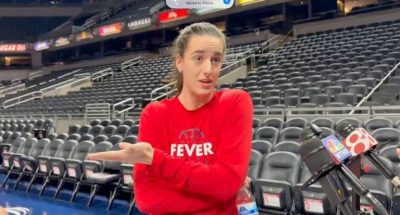
Caitlin Clark, the Indiana Fever’s star guard, has finally broken her silence following the on-court incident where she was hit in the throat by Phoenix Mercury forward Alyssa Thomas. Speaking to reporters at Friday’s shootaround, Clark not only addressed the controversial foul but also launched into a broader critique of the intense media scrutiny and narrative surrounding her and the WNBA. Her comments highlight a growing frustration with the constant focus on “minuscule things” rather than the game itself, sparking a significant conversation about the **Caitlin Clark WNBA discourse**. This pivotal moment marks her first public statements since the physical encounter, offering insight into her perspective on both officiating and the league’s media landscape.
A Call for Better Officiating and Player Protection
Clark’s initial comments directly addressed the physical play she endured on June 24. During a scramble for a loose ball, Thomas made contact with Clark’s throat, an incident that quickly became a flashpoint for debate. While a flagrant foul was not called during the game itself, a subsequent replay review led to Thomas being suspended for one game, with the foul retroactively designated as a flagrant 2. Clark unequivocally stated her belief that “it was a flagrant foul” and emphasized that “our refereeing just needs to be better.” She acknowledged the immense difficulty of officiating, calling it “one of the hardest jobs in the world” where officials “get yelled at the whole time by everybody” and are “never winning.” Despite this understanding, Clark stressed the league’s paramount responsibility. “The league’s just got to do better protecting our players in that regard,” Clark asserted, pointing out that this discussion about player protection has been ongoing for approximately three years. She believes that the incident was “pretty straightforward” upon review, despite the initial on-court decision. The need for consistent enforcement of rules to safeguard athletes is a sentiment that has been echoed by many within the league, and Clark’s voice adds significant weight to the ongoing dialogue. For more details on her initial comments regarding the incident, readers can refer to this report: Caitlin Clark calls out the WNBA discourse in first comments since being hit in throat.
Navigating the Shifting Tides of the Caitlin Clark WNBA Discourse
Beyond the specific foul, Clark expressed deep frustration with the media’s portrayal of her and the Indiana Fever, revealing the emotional toll of constant scrutiny. She admitted to actively trying to avoid social media and news headlines, yet found herself confronted by narratives she felt were inaccurate and overly negative. Clark specifically cited a headline that read, “‘This season has been everything but fun and just full of frustration for Clark and the Fever.'” She quickly countered this, stating, “no one ever asked me that. Like, that’s wrong.” Her plea was clear and direct: “discuss my play, discuss if I played bad, discuss if I played good, discuss our play.” This sentiment underscores a desire for the focus to remain on the athletic performance and team dynamics rather than external drama. While acknowledging that “at times there’s other things that need to be talked about,” Clark urged for a shift to “continue to move on” from the incessant focus on non-basketball related issues. The excessive coverage, in her view, is considered a “real disservice to” the WNBA and its other talented players, potentially overshadowing their achievements and contributions. Her perspective suggests that the intense spotlight, while bringing unprecedented attention to the league, also risks distorting its true essence. She feels the constant dissection of every “minuscule thing” about her and the Fever detracts from the broader competitive landscape of the WNBA.
The Personal Impact and Broader Implications
Clark’s candid remarks also offered a rare glimpse into the personal impact of her unprecedented rookie season. She made it clear that despite the public persona often presented, she is “not a robot.” “I have emotions, I have feelings, and it can be really difficult to go through a lot of that,” she shared, underscoring the immense pressure and scrutiny she faces daily. This personal revelation adds another layer to the ongoing **Caitlin Clark WNBA discourse**, suggesting that the constant dissection of every aspect of her career takes a significant emotional toll. Her comments serve as a powerful reminder that while the league benefits immensely from her star power and the attention she generates, the human element behind the headlines must not be overlooked. The discussion about protecting players has been a consistent theme, and Clark’s recent statements have brought it back to the forefront, demanding renewed attention from the league’s leadership. For further insights into Clark’s broader critique of the league’s narratives, this article provides additional context: Caitlin Clark: Excessive coverage of her ‘a real disservice to’ WNBA, other players.
Caitlin Clark’s recent statements have ignited a crucial conversation, moving beyond a single controversial play to address the broader environment of the WNBA. Her call for improved officiating, consistent player protection, and a more balanced media narrative underscores the complex challenges faced by the league’s most prominent star. As the season progresses, how the WNBA responds to these concerns will undoubtedly shape the future of player safety and media engagement, influencing the evolving **Caitlin Clark WNBA discourse** for seasons to come. Her voice, now heard clearly, demands a thoughtful and comprehensive response from all stakeholders involved in the league’s growth and development.