









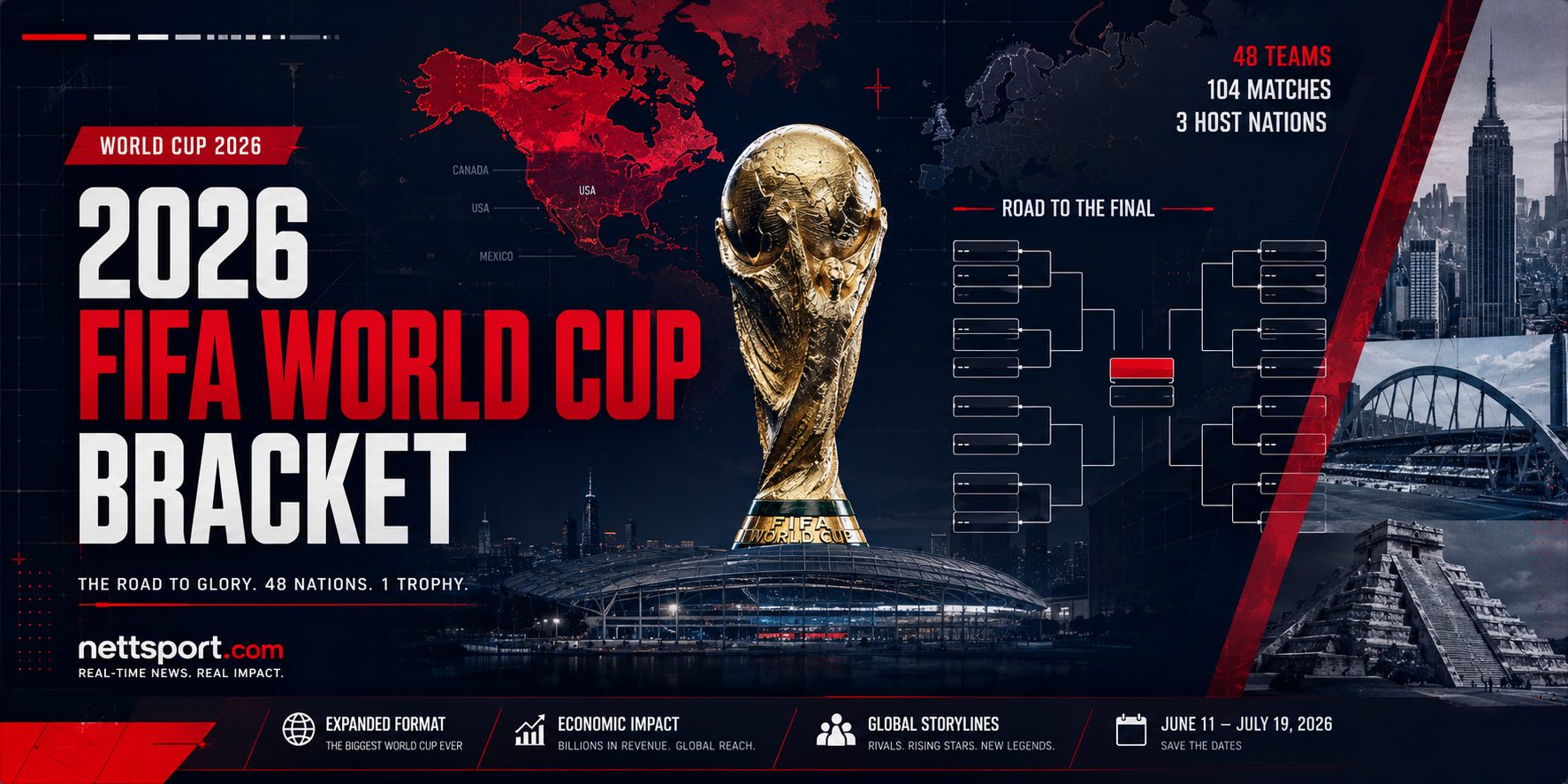
The global football landscape is on the precipice of a monumental shift with the advent of the 2026 FIFA World Cup. Hosted across the vast territories of Canada, Mexico, and the United States, this edition marks an unprecedented expansion, swelling from 32 to 48 participating nations. This transformation doesn’t merely add more teams; it fundamentally reconfigures the tournament’s structure, particularly the highly anticipated 2026 FIFA World Cup Bracket, setting the stage for a Round of 32 that promises unparalleled drama and strategic complexity.
For decades, football fans have grown accustomed to the familiar 32-team format, culminating in a Round of 16. However, the 2026 iteration introduces a new frontier, challenging traditional perceptions of tournament progression and team seeding. The expanded field means more matches, more opportunities for emerging footballing nations, and a considerably longer journey to the coveted final. Understanding the nuances of where teams will be seeded from the Round of 32 and who their potential opponents might be is crucial for predicting the narrative of this historic event.
The Expanded Format: A New Era for the 2026 FIFA World Cup Bracket
The most significant change for the 2026 tournament is the leap to 48 teams, which necessitates a complete overhaul of the group and knockout stages. Instead of eight groups of four, there will now be 12 groups, each comprising four teams. From these groups, the top two teams will automatically advance to the Round of 32. Crucially, the eight best third-place finishers across all groups will also secure a spot in the knockout phase. This adjustment is designed to maintain competitive integrity while offering more nations a taste of the knockout rounds.
This expanded pathway to the Round of 32 means that group stage performance takes on an even greater significance. Not only will teams be battling for a top-two finish, but those hovering around third place will also be acutely aware of their goal difference and disciplinary records, which could prove decisive in earning one of those coveted additional berths. The move creates an entirely new layer of tension and tactical consideration throughout the initial phase. It is expected that the overall number of matches will rise significantly, increasing the spectacle for fans worldwide. The schedule, including kickoff times and dates for these numerous fixtures, has been a key point of interest for many. For a detailed breakdown of the extensive match calendar, fans can consult resources like the 2026 FIFA World Cup Schedule, which offers insights into the logistical undertaking of this colossal event.
Understanding Seeding and the Road to the Knockouts
FIFA’s seeding principles are traditionally rooted in a combination of the FIFA World Rankings, past World Cup performances, and a geographical balance to ensure a diverse distribution of top teams across groups. For the 2026 FIFA World Cup Bracket, this methodology will be adapted to fit the 48-team structure. Pot 1 teams, typically the highest-ranked nations, will likely be distributed across the 12 groups, ensuring they avoid each other in the initial stage. Their path through the Round of 32, if they top their groups, is expected to be more favorable, theoretically setting them against lower-ranked group winners or third-place qualifiers.
The real intrigue lies in the potential for highly competitive groups where even traditionally strong teams might finish second or, more dramatically, third. A strong third-place finish, if it is among the best eight, could land a formidable side in a difficult Round of 32 matchup. This opens the door for unexpected early clashes between traditional powerhouses, a scenario that was less common in the previous 32-team format. The complexity of the group standings and the implications of the 48-team field on team progression are topics frequently discussed. Comprehensive analysis of how teams are navigating the new format, including group standings and results, is being carefully followed by football analysts, as shown in reports covering World Cup Group Standings.
Top seeds are expected to be given certain protections in the knockout phase, ensuring that the giants of football are not pitted against each other too early. However, the sheer volume of teams and the inclusion of eight third-place qualifiers mean that the road for any team, regardless of seeding, will be arduous and unpredictable. Every match, every point, and every goal will contribute to a team’s potential seeding within the Round of 32 and, consequently, their perceived path through the 2026 FIFA World Cup Bracket.
Projecting Potential Blockbusters in the Round of 32
The expanded 2026 FIFA World Cup Bracket promises a captivating Round of 32 with a higher probability of intriguing matchups. Imagine a scenario where a historically strong team, perhaps an Argentina or a Germany, finishes second in a tough group and finds themselves facing another continental heavyweight who topped a relatively weaker group. Or consider an emerging African or Asian nation, having capitalized on the expanded format, securing a third-place qualification and earning a shot at a global titan. These are the narratives that will be woven into the fabric of the tournament.
Such early knockout encounters could ignite the competition with a fervor unseen before, offering high-stakes football much earlier than fans are accustomed to. The increased number of teams means that the quality differential between a top-seeded group winner and a third-place qualifier might not always be as stark as it once was, especially with the global rise in footballing standards. For instance, the hopes of a nation like Scotland progressing to the last 32 are being closely monitored, as the expanded format offers new avenues for qualification and advancement, a sentiment explored in analyses like Scotland’s World Cup Round of 32 Hopes.
The strategic considerations for coaches will also be amplified. Managing squad rotation, avoiding suspensions, and maintaining peak physical condition will be paramount over an extended tournament. The journey through the 2026 FIFA World Cup Bracket will not just test skill, but also resilience and tactical acumen from the very first whistle to the final whistle of the Round of 32. This expansion injects a fresh dose of unpredictability and excitement, ensuring that every fan, every team, and every match will play a vital role in shaping the ultimate champions of the 2026 FIFA World Cup.