








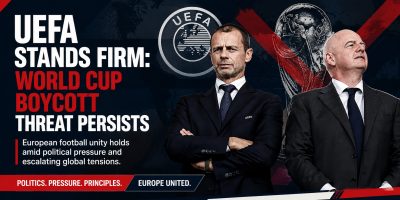
European football’s governing body, UEFA, remains steadfast in its
The crisis originated from the FIFA Forward Enterprise (FFE) proposal, a much-maligned scheme designed to sell minority stakes in the World Cup and other major tournaments to private investors. News of this investment ploy, which could have significantly benefited Infantino, sparked immediate outrage across European football. Following intense pressure, FIFA scrapped the FFE plan last Friday, and subsequently issued a statement admitting ‘mistakes were made’ during its conception. Infantino himself offered an apology, seemingly hoping to quell the growing dissent. However, UEFA’s response has been unequivocal: the apology and withdrawal of the plan are insufficient to restore trust. As reported by multiple outlets, including Yahoo Sports, the European body’s position holds firm.
UEFA’s Stance Remains Unchanged
UEFA’s 55 member associations set explicitly clear conditions for averting a boycott. First, they demanded the complete withdrawal of proposals to sell off major competitions. Secondly, they demanded concrete assurances that such attempts to ‘disfigure the game’ would never be made again. According to UEFA, FIFA has not met these crucial conditions. A statement from UEFA to ESPN and The Athletic emphasized this point, stating, ‘Uefa’s associations were very clear about the conditions attached to their non participation in Fifa competitions.’
Furthermore, UEFA’s declaration of lost confidence in Infantino’s presidency, initially made last Saturday, remains unchanged. UEFA dismissed FIFA’s subsequent announcement that its senior leadership, attending a crisis meeting in Rabat, ‘reaffirmed their full support’ for Infantino, as inconsequential. UEFA suggested that those expressing support were employees whose careers depended on Infantino’s favor, as detailed in reports like the one from The Guardian. This sentiment was echoed by FIFPRO, the global players’ union, which condemned what it called a ‘profound abuse of presidential power.’
The Looming UEFA World Cup Boycott Threat to FIFA Competitions
The implications of a
For the upcoming women’s World Cup, UEFA member nations reserve eleven of the 32 available slots. The first tournament potentially affected by this standoff is the Under-20 Women’s World Cup, scheduled to begin in Poland on September 5. Should no resolution be reached before this date, it would mark the initial implementation of UEFA’s drastic measure, sending shockwaves through the international football community.
A Crisis of Governance Continues
The ongoing dispute leaves the governance of international football in a state of profound turmoil. Despite Infantino’s attempts to appease UEFA, the European body remains unconvinced that FIFA’s leadership can be trusted to act in the best interests of the game. The situation is further complicated by UEFA’s reported hope of exploiting divisions within FIFA’s leadership, suggesting that the conflict is far from a simple disagreement. The football world watches anxiously as these two powerful entities remain locked in a high-stakes battle, with the integrity and future of major international competitions hanging in the balance. The path forward for FIFA and UEFA is unclear, but one thing is certain: the current state of affairs cannot be sustained indefinitely without significant repercussions for the sport globally.