









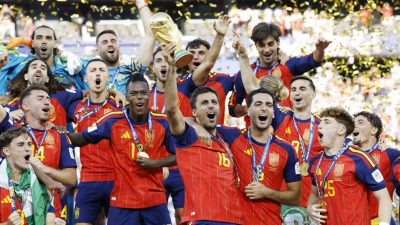
Spain has once again etched its name into football history, securing their second men’s World Cup title in a captivating final against Argentina. Many are calling this a ‘victory for football,’ as Ferran Torres netted the decisive extra-time goal, and captain Rodri proudly lifted the coveted trophy high in New Jersey. The narrative surrounding this monumental win isn’t just about the silverware; it’s a profound testament to a dominant, possession-based style that captivated neutrals and left little sympathy for their South American opponents. Spain ultimately overcame Argentina’s challenge in a battle of endurance.
Dominance Personified on the Grandest Stage
Spain’s performance throughout the final was a masterclass in control and tactical superiority. From the opening whistle, they dictated the tempo, relentlessly pursuing their attacking philosophy. Statistics paint a clear picture of their command: Spain maintained a staggering 65% possession, registered an expected goals (xG) tally of 1.94, and unleashed 20 shots on goal, with 11 finding the target. This relentless pressure ultimately wore down an Argentine side that struggled to find its rhythm and create meaningful opportunities. Spanish goalkeeper Unai Simon stood out, earning the Golden Glove award for the tournament’s best goalkeeper. He kept an impressive seven clean sheets in eight matches. Spain conceded just one goal throughout the entire 2026 World Cup campaign – the fewest a winning team has ever conceded in the tournament’s history. Former England captain Alan Shearer articulated the sentiment shared by many, stating on BBC One, “There is no doubt that the right team won. From start to finish, Spain controlled possession. They were the ones looking to play football, create chances and get in behind. This is a result for football because of the way that they have played. Spain deserve it.” For more detailed analysis of Spain’s dominant performance, you can read the full report on BBC Sport.
A Dynasty Forged in Consistency and Spain’s World Cup Victory
This latest triumph solidifies Spain’s position as the preeminent force in international football. Their current squad now holds an unparalleled collection of titles, being not only world champions but also Olympic and European champions. This remarkable achievement highlights a deep-rooted footballing culture across the nation. The women’s national team also holds a world title, further emphasizing this. The men’s team has now extended their incredible unbeaten streak to 38 matches across all competitions, marking the longest such run by any European team in history. This consistent excellence, built on a clear team ethos championed by coach de la Fuente, has been the hallmark of Spain’s World Cup victory. Interestingly, this World Cup journey mirrored their 2010 success in one peculiar aspect: both times, Spain failed to win their opening group stage match, drawing 0-0 with Cape Verde this year after a 1-0 loss to Switzerland in 2010. Despite this initial stumble, the team’s resilience and commitment to their playing style ultimately prevailed, culminating in a truly deserved championship.
Argentina’s Quiet Exit and Messi’s Unclear Future
While Spain celebrated a deserved victory, the final whistle brought a somber end to Argentina’s campaign. Lionel Messi, whom many regard as one of football’s greatest, was visibly emotional. Tears marked what many speculate could be his final World Cup appearance. His performance in the final seemed subdued, and the Argentine squad, despite their efforts, struggled to impose themselves against Spain’s relentless pressure. The quiet exit of Messi and his team contrasted sharply with the jubilant scenes of Spanish celebration. Following the defeat, Argentina’s coach, Lionel Scaloni, indicated he would take time to consider his future with the national team, adding another layer of uncertainty to a squad that now faces a period of introspection. Rodri, who received the Golden Ball for the tournament’s best player, epitomized Spain’s collective strength, overshadowing individual brilliance on the opposing side. A superior Spanish side ultimately denied Argentina the dream of another World Cup title, leaving fans to ponder what comes next for their legendary captain and the team. For more on the reactions and analysis of the final, including Messi’s emotional exit, visit ESPN Soccer.
Spain’s World Cup victory in 2026 will be remembered not just for the trophy, but for the comprehensive and compelling manner in which they achieved it. It was a triumph of beautiful football, tactical discipline, and unwavering persistence, culminating in a truly historic moment for the nation. As Rodri lifted the trophy high, surrounded by his triumphant teammates and the roar of the crowd, it was clear that this was more than just a win; it was, indeed, a resounding “victory for football” that will inspire generations.