









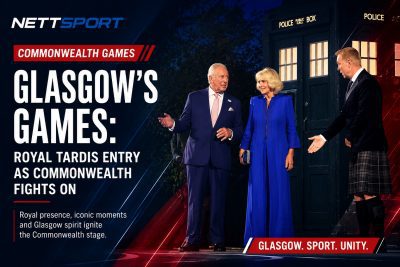
The 2026 Commonwealth Games in Glasgow opened on Thursday evening, July 23, 2026, to a truly surreal spectacle. King Charles and Queen Camilla emerged from a Tardis, setting a whimsical yet profound tone for an event that had been battling for its very existence, facing a significant Commonwealth Games battle for time and space. The city bravely stepped in to host after Victoria’s withdrawal, transforming what seemed doomed into a vibrant, if ‘cut-price,’ celebration that captivated audiences.
A Royal Entrance and the Commonwealth Games Battle for Time and Space
The OVO Hydro in Glasgow hosted an unforgettable opening ceremony. King Charles and Queen Camilla made a dramatic entrance, stepping directly out of a life-sized Tardis, an iconic symbol of British pop culture. Sir Chris Hoy, a celebrated Scottish Olympian, greeted them, adding to the star power and local flavor. This Doctor Who reference was more than just a whimsical touch; it was a poignant nod to the Games’ precarious journey. The Tardis, a police box design by Scottish architect Gilbert MacKenzie Trench, perfectly symbolized the event’s near “extermination” before Glasgow bravely stepped in to save it. A mechanical Loch Ness monster powerfully roared the first bars of “Flower of Scotland,” further cementing the Scottish identity and unique character of the proceedings. Glasgow’s decision to host came after Victoria pulled out due to significant financial pressures, leaving the future of the Games uncertain and prompting widespread concern. This opening ceremony, therefore, represented a triumph of resilience and ingenuity, marking a crucial moment in the ongoing Commonwealth Games battle for time and space. The feelgood factor was palpable throughout the arena, as the city embraced its unexpected role.
Stripped-Back Spectacle: Budget Constraints and Innovation
Necessity, as they say, is the mother of invention, and Glasgow’s 2026 Games are a testament to this adage. With significantly smaller budgets compared to previous iterations, the event has been widely described as a ‘stripped-back affair’. This was particularly evident in the scale: only 10 sports are being contested, a stark contrast to the 19 featured in Birmingham four years prior. Similarly, the athlete count stands at approximately 3,000, a notable reduction from nearly 5,000 at the last Games. Organizers have been forced to ‘cut its cloth accordingly’, with a clear focus on efficiency, sustainability, and maximum impact within financial limitations. Despite the reduced scale, a strong “feelgood factor” was maintained throughout the ceremony, proving that spectacle doesn’t always require immense spending. Prime Minister Andy Burnham, in his first major public engagement since taking office on Monday, July 20, 2026, underscored the political significance of the event. His attendance highlighted the national importance of these Games. The ability of Glasgow to deliver such a memorable opening under these constraints highlights the innovative spirit that has been brought to bear on the Commonwealth Games battle for time and space. For more details on the ceremony’s unique elements and the challenges faced, readers can refer to the original report on The Guardian’s coverage of the Glasgow 2026 opening.
More Than Just Games: A City’s Spirit on Display
Beyond the royal spectacle and the practicalities of a reduced budget, the opening ceremony was a heartfelt tribute to Glasgow itself and its people. Organizers intricately wove in several thematic elements, designed to reflect the city’s character, history, and enduring resilience. At one point, a spinning clock transformed into a vibrant kaleidoscope, symbolizing the transformative change experienced when individuals are freed from the daily grind of work and embrace leisure. A poignant visit to Glasgow’s famous shipyards was also included, a powerful nod to the city’s industrial heritage and its enduring spirit of craftsmanship and innovation. Throughout the event, the powerful message “People make Glasgow” was prominently displayed on screens, reinforcing the community-driven ethos that underpins the city’s identity. This emphasis on local identity and collective strength was a deliberate choice, distinguishing these Games from the more lavish productions of the past, such as Glasgow’s own 2014 hosting, which featured performances by Rod Stewart and Susan Boyle. The current approach, while necessarily more modest, has been widely praised for its authenticity and heart, resonating deeply with both attendees and viewers. The city’s ability to rally and host these Games, ensuring their survival, is a powerful statement about its enduring spirit and its unwavering commitment to the global sporting community. The success of the opening ceremony, despite the challenges, demonstrates that the Commonwealth Games battle for time and space is being fought with ingenuity and local pride, showcasing a new model for future events. Further insights into the cultural aspects and the overall atmosphere of the event can be found in this comprehensive report on the 2026 Commonwealth Games.
The Glasgow 2026 Commonwealth Games opening ceremony was a remarkable blend of royal pageantry, Scottish charm, and pragmatic innovation. From the King and Queen’s unexpected Tardis entry to the heartfelt tributes to Glasgow’s heritage, the event successfully launched Games that, just months ago, seemed on the brink of cancellation. It proved that even with tighter budgets and fewer events, the spirit of the Commonwealth Games can shine brightly, especially when a city like Glasgow steps up to the challenge with such creativity and determination. The Commonwealth Games battle for time and space continues, but Glasgow has certainly delivered a compelling and inspiring opening salvo, setting a new benchmark for resilience in major sporting events.