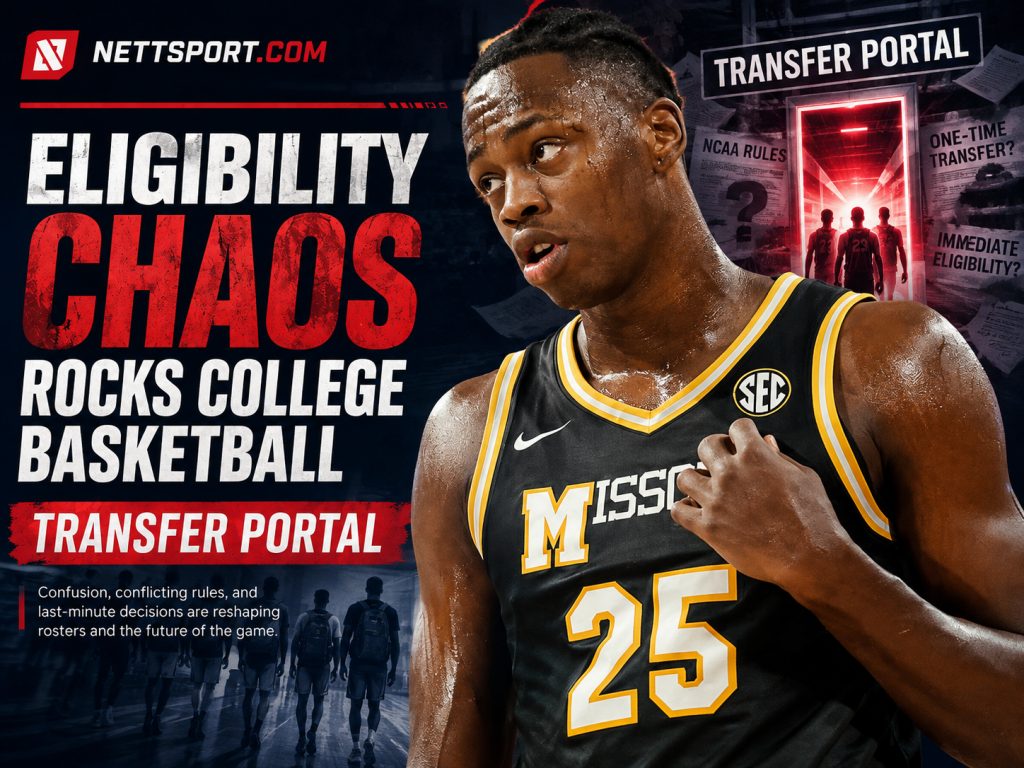
The landscape of college basketball is currently being reshaped by an unprecedented wave of player movement and eligibility disputes, transforming what was once a predictable offseason into an “unparalleled free agency window.” The traditional adage, “National Championships are won in April but are built in the spring,” rings particularly hollow this year, as teams find their rosters in flux just weeks before official practices tip off in late September. A slew of fifth-year seniors has brazenly challenged the NCAA for an extra year of eligibility, creating a chaotic environment where the judicial system, rather than coaching decisions, may ultimately determine team compositions for the upcoming 2026-27 season. This dynamic period sees coaches navigating not just talent acquisition through the college basketball transfer portal, but also the legal uncertainties surrounding their potential new stars.
The Shifting Sands of the College Basketball Transfer Portal
The recent commitments of high-profile transfers underscore the volatile nature of this offseason. On Thursday, Michigan State transfer Jaxon Kohler made headlines by committing to BYU, a crucial move that addresses what many considered Kevin Young’s biggest roster hole. Kohler promises significant impact; he averaged 12.6 points and 8.9 rebounds, while also shooting 39% from 3-point range for a Michigan State club that secured a No. 3 seed in the 2026 NCAA Tournament. His journey to BYU is particularly complex, as Kohler had previously signed an Exhibit 10 contract and even suited up for the Utah Jazz’s summer league team. However, he has carved a pathway back to college basketball after successfully winning a temporary restraining order against the NCAA, highlighting the legal battles many players are currently waging.
The chaos continued on Friday with another significant development: former UCLA guard Donovan Dent committed to LSU. Dent’s commitment marks him as just the latest player whose eligibility for the 2026-27 season remains uncertain, yet he has chosen to join first-year coach Will Wade’s program. If deemed eligible, Dent will reunite with his former UCLA teammate, Skyy Clark, in Baton Rouge, potentially forming a potent backcourt for the Tigers. These high-stakes commitments, made under the shadow of ongoing legal challenges, illustrate the high-risk, high-reward nature of recruiting in this unique era of the college basketball transfer portal.
NCAA’s “Five-in-Five” Rule Under Fire
At the heart of this widespread eligibility crisis is the NCAA’s adoption of new age-based eligibility guidelines, commonly referred to as “five-in-five,” which were implemented in June. A critical aspect of these new rules is the NCAA’s decision not to grandfather in the Class of 2022 for a fifth year of eligibility. This policy has ignited a firestorm of legal challenges, with Jaxon Kohler being just one of hundreds of seniors involved in over double-digit court cases disputing the new rule across the country. Despite facing numerous losses in court cases spanning Colorado, California, Tennessee, Georgia, and Ohio, the NCAA has steadfastly held its ground, refusing to budge on its stance.
The implications of this unwavering position are profound, leaving the ultimate fate of many players and, by extension, the competitive balance of numerous teams, hanging in the balance. The judicial system is now poised to deliver the final verdict on these eligibility disputes, a process that could extend well into the season or even beyond. This legal entanglement adds an unprecedented layer of complexity to team building, forcing coaches and athletic directors to make critical roster decisions with significant uncertainty regarding who will actually be permitted to take the court. The outcome of these legal battles will undoubtedly shape the narrative of the upcoming college basketball season, making every commitment through the college basketball transfer portal a gamble.
Grading the Moves in the College Basketball Transfer Portal
Evaluating the success of these transfer portal moves is a nuanced task, heavily influenced by eligibility outcomes yet to be determined. For BYU, securing Jaxon Kohler represents a potential A-grade acquisition, assuming the NCAA solidifies his eligibility. His proven production and ability to stretch the floor would immediately elevate Kevin Young’s frontcourt. Similarly, Donovan Dent’s commitment to LSU could be a game-changer for Will Wade, especially if he and Skyy Clark are both cleared to play. The potential for two former UCLA guards to anchor the Tigers’ backcourt offers a high upside, though the uncertainty surrounding their status tempers an immediate top grade.
The current environment demands a cautious approach to grading, as teams cannot fully assess the true value of these transfers until the legal landscape clears. The sheer volume of players challenging the NCAA’s “five-in-five” rule means that many teams are operating with provisional rosters, making definitive evaluations premature. This period of unparalleled free agency, driven by both player ambition and legal precedent, continues to evolve daily. On August 22, 2026, the sports world buzzed with not only college basketball news but also major soccer transfer rumors, and the focus in college hoops remains squarely on the courts – both the basketball kind and the legal kind – awaiting resolutions that will define the season ahead. The ongoing saga of the college basketball transfer portal is a testament to the dynamic and often unpredictable nature of modern collegiate athletics.