







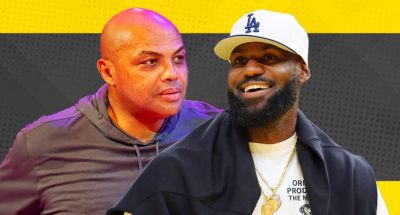
The basketball world was recently sent into a frenzy by LeBron James’s unexpected decision to sign with the Philadelphia 76ers. This move, which saw the four-time MVP bypass a potential third stint with the Cleveland Cavaliers, particularly struck a chord with NBA Hall of Famer Charles Barkley. Barkley, known for his candid commentary, openly expressed his disappointment, articulating a vision for James’s career that diverged sharply from the path chosen by the superstar.
Speaking on ESPN Cleveland, Barkley did not hold back his feelings regarding James’s choice. “I’m disappointed. I wanted him to go to Cleveland,” Barkley stated emphatically, making his preference for James to return to his original franchise abundantly clear. His rationale centered on a perceived lack of “natural affiliation” between James and Philadelphia, a sentiment he also extended to previous rumors linking James to the Golden State Warriors. While a return to the Miami Heat, another former team, might have been viewed differently by Barkley, the emotional and historical resonance of Cleveland held a unique significance for the analyst. For Barkley, the opportunity for James to conclude his career where it began represented a narrative arc that was simply too compelling to pass up.
Barkley’s Vision for a Cleveland Finale
For Charles Barkley, a return to the Cleveland Cavaliers would have provided the perfect “storybook ending” and a “perfect bookend” to LeBron James’s unparalleled career. This perspective is deeply rooted in James’s already monumental list of accomplishments. James has already secured four NBA championships, holds the prestigious title of the NBA’s all-time leading scorer, and is widely considered one of the two greatest players to ever grace the hardwood. From Barkley’s viewpoint, there is nothing left for James to accomplish in terms of individual accolades or team championships that could further elevate his legacy in a meaningful way. Instead, a sentimental return to the city that first embraced him, and to which he famously brought a championship in 2016, was seen as the ultimate capstone. This narrative closure was believed by many to hold more weight than the pursuit of another ring at this advanced stage of his career, especially given his already overflowing trophy cabinet.
Why Charles Barkley Wanted LeBron James to Return to Cleveland
Beyond the powerful emotional and narrative appeal, the Cleveland Cavaliers themselves were not a team to be overlooked. The Cavaliers had demonstrated significant competitiveness in the season prior to James’s decision, reaching the Eastern Conference Finals. While they were ultimately swept by the eventual NBA champion New York Knicks, their deep playoff run showcased a roster capable of contending. This meant that James would not have been joining a rebuilding project or a struggling franchise, but rather a team with a solid foundation and legitimate aspirations. Their competitiveness was demonstrated by this, and it was suggested that James wouldn’t be joining a rebuilding project. Barkley’s disappointment stemmed from seeing James prioritize a new challenge over what he perceived as a more fitting and impactful conclusion to his playing days. The idea that Charles Barkley wanted LeBron James to return to Cleveland was not merely a romantic notion, but also a belief in the competitive viability of the Cavaliers as a destination.
James, in his own social media posts about the decision, cited that his sole factor in taking a team-friendly deal with the Sixers was done with the aim of winning one more championship. This ambition, while entirely understandable for a competitor of James’s caliber, was viewed by Barkley as a missed opportunity for a different kind of legacy enhancement. The pursuit of an additional ring, while adding to his already historic tally, was seen by Barkley as less impactful than the narrative completeness a Cleveland return would have offered.
The Championship Pursuit vs. A Storybook Ending
LeBron James’s move to Philadelphia was undeniably influenced by the formidable roster the 76ers have assembled. The stunning choice came after the blockbuster addition of Jaylen Brown this offseason, joining an already potent core featuring MVP Joel Embiid and rising star Tyrese Maxey. This roster is now considered one of the most loaded in the NBA, clearly positioning the Sixers as immediate and strong title contenders. The allure of such a powerful team, offering a direct and immediate path to another championship, was undoubtedly a major factor in James’s choice. His decision reflects a clear prioritization of team success and the ultimate prize at this stage of his career.
However, Barkley’s perspective highlights a classic dilemma in professional sports: the balance between chasing ultimate glory and crafting a perfect, emotionally resonant career narrative. While James has decided that his perfect ending involves another championship, Barkley and many others envisioned a different, perhaps more poetic, conclusion in Cleveland. The choice was ultimately James’s to make, but the disappointment voiced by influential figures like Barkley underscores the deep emotional investment fans and analysts have in the careers of legendary athletes. This move will be analyzed for years to come, a sentiment widely discussed in sports media, including this piece detailing Barkley’s reaction to the surprising decision. Regardless of personal preference, James has made his intentions clear: the pursuit of another title takes precedence.