






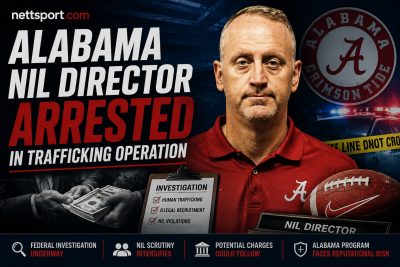
The sports world reeled this week from the news of Aaron Suttles’ arrest, a development that sent shockwaves through college athletics. Suttles, a figure well-known in Alabama football circles, now faces serious charges. Once a celebrated sportswriter, he transitioned into a pivotal role within the Name, Image, and Likeness (NIL) landscape, serving as the director of content for Yea, Alabama. His recent arrest, however, has thrust him into headlines for an entirely different and troubling reason, linking him to a wider human trafficking operation. This incident, centered on an Alabama NIL director arrest, highlights the intense scrutiny individuals in influential positions within the evolving collegiate sports ecosystem now face.
The Charges and Yea, Alabama’s Swift Response
The Shelby County Drug Enforcement Task Force took Aaron Suttles into custody on Thursday, arresting him as one of fifteen individuals in an extensive investigation. Charges against him include soliciting prostitution. Authorities described this operation as targeting human trafficking, underscoring the gravity of the situation. The news sent immediate ripples through the collegiate sports community, especially given Suttles’ prominent position as an Alabama NIL director.
Yea, Alabama, the official NIL organization for Alabama Athletics, swiftly addressed the matter. The organization facilitates authentic NIL opportunities for student-athletes and provides exclusive content to subscribers. Yea, Alabama confirmed Suttles’ suspension and stated that an internal investigation is currently underway. This decisive action reflects how seriously the institution treats such allegations. The organization’s mission, which its platform describes, connects fans with exclusive content and opportunities; however, the legal troubles of one of its key directors now overshadow this mission. The swift response was crucial, given the high-profile nature of the “Alabama NIL director arrest” and its potential impact on the collective’s reputation. For more details on the initial report, readers can refer to this Awful Announcing article, which first broke the story.
A Career Trajectory: From Pulitzer to Public Scrutiny
Before his tenure at Yea, Alabama, Aaron Suttles forged a notable career in sports journalism, a path that saw him achieve significant recognition. He worked as a decorated sportswriter, earning accolades for his contributions to The Tuscaloosa News, where he helped win a Pulitzer Prize for breaking news reporting on a devastating tornado in April 2011. Suttles also spent years covering the Alabama Crimson Tide, first for the local outlet and later nationally for The Athletic, until 2023. His transition from reporting on the Crimson Tide to directing content for their official NIL collective marked a significant shift in his professional path, placing him at the forefront of a new era in college sports.
However, Suttles’ journalistic career was not without its blemishes; current events have brought this past into sharper focus. A particularly sensitive incident involved his premature reporting of the death of legendary Alabama quarterback Ken Stabler. This misstep caused considerable pain to Stabler’s family, as Suttles released the news before they had the chance to inform loved ones. Kendra Stabler, Ken Stabler’s daughter, recently commented on Suttles’ current arrest via social media. She reflected on the importance of integrity, stating, “Sometimes life has a way of reminding us that integrity matters.” While she emphasized not celebrating anyone’s downfall, her remarks drew a clear line between the past incident and the present charges, underscoring a consistent theme of ethical conduct. The “Alabama NIL director arrest” brings this past into sharp relief, prompting reflections on public figures and accountability within the sports media and administrative landscape. The full context of Suttles’ career, from his early successes to this recent controversy, is explored further in the original report.
Broader Implications for College Sports and NIL Integrity
The arrest of a prominent figure like Aaron Suttles, an Alabama NIL director, carries significant weight beyond the immediate legal proceedings. It casts a shadow over the Name, Image, and Likeness landscape, an area of college athletics that remains relatively new and constantly evolving. The integrity of individuals facilitating NIL deals is paramount, as these organizations connect student-athletes to opportunities that can shape their futures. An incident of this nature, specifically the “Alabama NIL director arrest,” inevitably raises questions about vetting processes and the broader ethical framework surrounding NIL collectives.
The Shelby County Drug Enforcement Task Force’s investigation, which led to Suttles’ arrest alongside fourteen other men, highlights a serious societal issue. For the University of Alabama and Yea, Alabama, the focus will undoubtedly be on maintaining trust and transparency. Yea, Alabama’s initiated internal investigation is a crucial step in addressing the situation and ensuring that the organization’s operations align with its stated values and ethical standards. The unfolding events serve as a stark reminder of the responsibilities that come with positions of influence within college sports, particularly as the NIL era continues to mature. The sports community will closely monitor further updates on the situation, as the implications of this “Alabama NIL director arrest” continue to develop and shape perceptions of the burgeoning NIL industry.